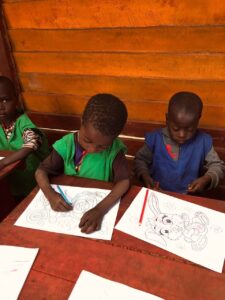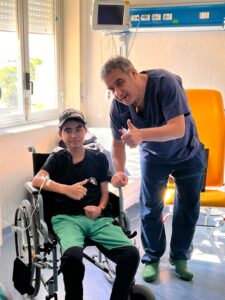

El Jardín de la Esperanza is growing—actually, multiplying. Since the beginning, we’ve believed in working with small groups of children (no more than 15–20) to ensure high-quality support in all areas we focus on (education, health, social risk prevention, etc.). While we continue to search for a larger space in Los Curos, where we were born and will keep working, we have meanwhile opened a new day center in Loma de Los Maitines, which celebrated its first anniversary on April 27, 2023.
Only a few kilometers separate the two centers; their organization is similar, but the social fabric and physical environments are quite different. Families in Los Curos often face high levels of dysfunction, substance abuse, extremely dilapidated housing, and poor hygiene conditions. Loma de Los Maitines, a steep, high-risk hydrogeological area (Loma means hill), was settled in the 1970s by farming families from Los Pueblos Del Sur, a rural area a few hours away. The houses, though precarious and seemingly defying the laws of physics, are generally hygienic despite the presence of livestock in tight spaces. Due to the country’s humanitarian crisis, the past decade has seen a mass exodus from the Loma, with most working-age residents migrating to countries like Peru, Ecuador, Colombia, and Argentina, often leaving children in the care of grandparents, uncles, or a single parent. These children are frequently passed between households, as migrating relatives return briefly before leaving again—some haven’t seen their parents in years.
The children of Los Curos and Los Maitines share challenges such as poor nutrition, emotional fragility, exposure to abuse, and significant cultural deprivation—consequences of their social environment and an under-resourced school system that offers only 3–4 days of classes per week. As a result, many finish sixth grade with only second-grade skills. The core mission of the Jardín is to strengthen these children and bridge these gaps through academic leveling and an alternative educational approach.
Thanks to the partnership with Fe y Alegría, an educational institution founded by the Jesuits and present in the most disadvantaged rural and urban areas (barrios) of Venezuela, the Jardín has established itself at the CEC (Centro Educativo Comunitario) San Benito in Loma. Here, children arrive under the scorching sun or heavy rains typical of this tropical Andean region, walking along endless and steep staircases that connect the top of Loma de Los Maitines, where the CEC is located, to the lower part. The CEC is a large space with big halls, a courtyard for recreational activities, and a very steep land where maize, beans, and bananas are thriving among mango trees.
An agricultural, education and creative center
In March 2023, once again with the support of the Chincherini Foundation, the Jardín finally became the owner of its own facility. Not in the Los Curos area, where we continue to search, but in one of the most beautiful and prosperous areas of Mérida: El Valle, specifically in the La Carbonera sector.
El Valle is a rural area situated between 2000 and 2500 meters above sea level, located about ten kilometers from the historic center of Mérida. It is a stunning landscape, dominated by dense cloud forest vegetation that climbs up to 4000 meters above sea level, reaching the Paramo de Los Escoriales and Paramo de Los Conejos. Once a popular destination for local and foreign tourism, it now sees only small groups of people on weekends due to the limited availability of fuel and long queues for it. Potatoes, vegetables, legumes are cultivated, and livestock farming is developed. In July, summer camps for both Jardins will begin at the house and land, with children from our historic partner, the Don Bosco Foundation, also joining. When the Jardín started twelve years ago, it was thanks to the experience we gained while working at the children’s orphanage of this old institution, which supported us in our independent path, focusing mainly on working with girls. Two years ago, the Foundation opened its orphanage to girls as well and now operates a mixed system of boarding and day care, benefiting around 80 children.
While we prepare the facility to welcome the various groups, the land adjacent to the house is being cleared and cultivated. Last week, the first little lettuces timidly appeared.